Hey there! I’m a supplier of aluminum sheets and plates, and one question I get asked a lot is how the weight of these products varies with the grade. Well, let’s dive right into it. Aluminum Sheet/Plate
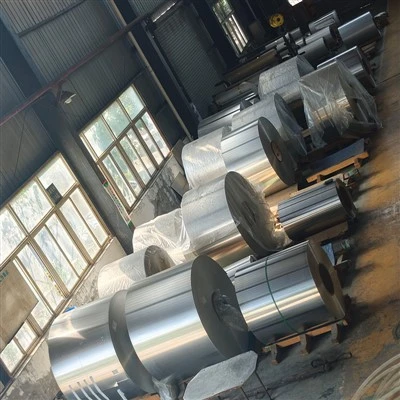
First off, you gotta understand that the grade of an aluminum sheet or plate is like its fingerprint. It tells you a lot about what the material is made of and what it can do. Different grades are formulated with various alloying elements in different proportions, and these elements have a big say in how heavy the aluminum will end up being.
Let’s start with some of the common grades. Grade 1100 is one of the purest forms of commercial – grade aluminum, with a minimum of 99% aluminum content. Because it’s so pure, it has a density that’s pretty close to the base density of aluminum, which is about 2.7 g/cm³. When you’re dealing with a sheet or plate of 1100 grade, it’s gonna be on the lighter side compared to some other grades.
Let’s say you have a 1 – square – meter sheet of 1100 – grade aluminum that’s 1 millimeter thick. Using the density formula (mass = density x volume), and since the volume of our sheet is 1m² x 0.001m = 0.001m³ or 1000 cm³, the mass of this sheet would be 2.7 g/cm³ x 1000 cm³ = 2700 grams or 2.7 kilograms. It gives you a good idea of what to expect for a relatively pure aluminum product.
Now, let’s talk about Grade 3003. This is one of the most widely used grades out there. It has manganese as its primary alloying element, usually around 1.2%. This small addition of manganese makes the grade stronger and more corrosion – resistant than 1100. But what about the weight? The density of 3003 – grade aluminum is just slightly higher than that of 1100, coming in at about 2.73 g/cm³.
Sticking with our 1 – square – meter, 1 – millimeter – thick sheet example, the volume remains the same (1000 cm³). But when we calculate the mass using the new density, we get 2.73 g/cm³ x 1000 cm³ = 2730 grams or 2.73 kilograms. You can see that even a small change in the alloy composition can lead to a noticeable difference in weight.
Next up is Grade 5052. This grade is known for its excellent formability and high strength – to – weight ratio. It contains magnesium as the main alloying element, usually in the range of 2.2 – 2.8%. The density of 5052 – grade aluminum is about 2.68 g/cm³. That’s a bit lower than the previous two grades we’ve talked about.
Using our standard sheet dimensions again, the mass of a 1 – square – meter, 1 – millimeter – thick 5052 – grade aluminum sheet would be 2.68 g/cm³ x 1000 cm³ = 2680 grams or 2.68 kilograms. This might seem counter – intuitive since it’s a stronger grade, but that’s the beauty of alloying. The right combination of elements can give you a lighter yet stronger material.
Grade 6061 is another popular choice, especially in structural applications. It has both magnesium and silicon as alloying elements. The density of 6061 – grade aluminum is approximately 2.7 g/cm³, which is pretty close to that of pure 1100 – grade. But don’t be fooled by the similar density. The alloying elements in 6061 give it superior mechanical properties, like good weldability and high strength.
If we calculate the weight of our 1 – square – meter, 1 – millimeter – thick 6061 – grade sheet, it would be 2.7 g/cm³ x 1000 cm³ = 2700 grams or 2.7 kilograms, just like the 1100 – grade in our first example. However, in real – world applications, the 6061 – grade would be able to handle more stress and load despite having the same weight as the 1100 – grade sheet in this simple calculation.
Then there’s Grade 7075. This is a high – strength grade that’s often used in aerospace and military applications. It contains zinc as the main alloying element, along with smaller amounts of magnesium, copper, and chromium. The density of 7075 – grade aluminum is about 2.81 g/cm³.
For our 1 – square – meter, 1 – millimeter – thick sheet, the mass would be 2.81 g/cm³ x 1000 cm³ = 2810 grams or 2.81 kilograms. This is one of the heavier grades we’ve discussed, and it’s no coincidence that it’s also one of the strongest. The alloying elements in 7075 contribute to its high strength but also add a bit more weight.
Now, you might be wondering why the weight variation matters. Well, in many industries, every gram counts. In the automotive industry, using lighter – weight aluminum sheets can improve fuel efficiency. On the other hand, in the construction of aircraft, strength is crucial, and sometimes you’re willing to sacrifice a bit of weight for the extra strength that a higher – grade aluminum can offer.
If you’re in the market for aluminum sheets or plates, understanding how the grade affects the weight is super important. It can help you make an informed decision about which grade is best for your specific application. Whether you need a lightweight solution for a portable product or a strong, heavy – duty material for a structural project, we’ve got the right grade for you.
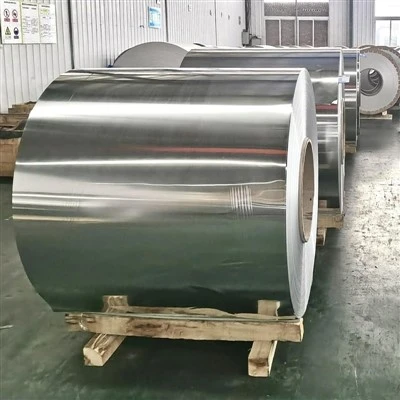
We’re here to help you find the perfect aluminum sheet or plate for your needs. Our team of experts has years of experience in the industry, and we can answer all your questions about grades, weights, and applications. So, if you’re thinking about making a purchase, don’t hesitate to reach out and start a conversation. We’ll work with you to get the right product at the right price.
Stainless Steel Profile References:
- ASM Handbook, Volume 2: Nonferrous Alloys and Special – Purpose Materials
- Aluminum Association Technical Publications
Wuxi Jin Ming Jian De Industry & Trade Co., Ltd.
Wuxi Jin Ming Jian De Industry & Trade Co., Ltd. is one of the most professional aluminum sheet/plate manufacturers and suppliers in China, also supports customized service. With abundant experience, we warmly welcome you to wholesale CE approved aluminum sheet/plate in stock here from our factory. If you have any enquiry about quotation, please feel free to email us.
Address: 2102-2105, Yuexing Building, Guangnan Road, Liangxi District, Wuxi City, Jiangsu Province, China.
E-mail: info@wxjmjdss.com
WebSite: https://www.jmjdsteelexp.com/
