Hey everyone, if you’ve ever worked with motors, transformers, or even those weirdly compact coils in small electronics, you’ve probably stumbled across enameled flat wire. I’m Jake, and I’ve been selling enameled flat wire for 8 years now—most days I’m fielding questions from electricians, industrial engineers, and even DIY guys who built a custom guitar amp, and one question pops up more than any other: “How good is this stuff at handling moisture?” It’s a huge deal, right? Because if your wire’s insulation breaks down from humidity, condensation, or even being splashed with water, your whole project or product goes kaput. Let’s break this down like I would when I’m on a call with a client, no fancy jargon, just real talk about what makes our enameled flat wire hold up when things get damp. Enameled Flat Wire
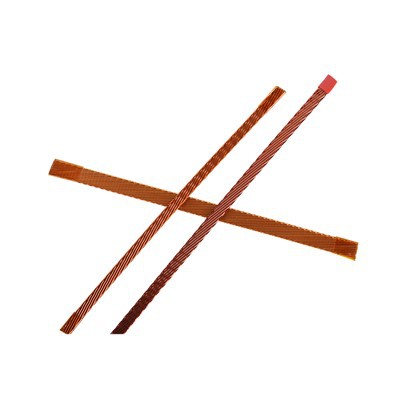
First off, let’s get one thing straight: enameled flat wire isn’t like the thin plastic-coated hookup wire you pick up at a hardware store. That plastic is basically a thin, flexible sleeve, but enamel is a thin, tightly bonded polymer film (usually polyvinyl formal, polyester, or polyamide-imide—wait, don’t zone out, I’ll explain why those matter) that’s baked directly onto the flat copper or aluminum conductor. That bonding is key here. I’ve had a client a few years back who used cheap round wire for a submersible pump motor, and the plastic coating started peeling after 6 months because it wasn’t glued down right. Flat wire’s enamel doesn’t peel like that if it’s applied properly.
Now, moisture resistance isn’t a one-size-fits-all number. When people ask me “what’s the moisture resistance?” they expect a single percentage or a timeframe, but honestly, it depends on three big things: the type of enamel coating, how it’s applied during manufacturing, and what kind of moisture we’re talking about—like, is it just high humidity in a garage, or is it full-on submersion in saltwater at a marina? Let’s start with the most common coatings we stock because those are the ones our customers use 90% of the time.
First up: polyester enamel. This is the workhorse. I’d say 60% of the flat wire we sell is polyester-coated, mostly for general-purpose motors, small transformers, and appliance coils. Polyester’s got pretty solid basic moisture resistance—like, it can handle up to 95% relative humidity (RH) at room temp for years without any issues. But here’s the catch: polyester starts to break down when things get warmer, right? If you’re running a motor that’s putting out a lot of heat, so the wire is at 120°C instead of 25°C, that 95% RH number drops fast. I’ve seen a polyester-coated transformer in a commercial dishwasher (yeah, they make those) go bad in 18 months because the heat + the constant steam created condensation that ate through the polyester. Not that polyester is bad—it’s just not for high-heat, super-damp environments.
Next, polyvinyl acetal (sometimes called Formvar, though that’s a brand name, not the material). This is the one people reach for when they need something that’s easy to wind because it’s flexible. Its moisture resistance is actually better than basic polyester, maybe a little? Wait, no—wait, let me check my old tech notes. No, Formvar does okay in humidity, but it’s more about bond strength than moisture. Oh right, I mixed that up. Formvar’s super good at sticking to small conductors, so it doesn’t have pinholes, which is a big one for moisture. A pinhole is a tiny flaw in the enamel—if you’ve got a pinhole, moisture can get straight to the copper, cause corrosion, and eat through the insulation from the inside out. So even if your coating’s “good,” pinholes kill it. That’s why our manufacturing guys do a continuity test after applying every coat—they run a current through the wire to make sure there are no gaps, which is non-negotiable for moisture resistance.
Then the heavy hitter: polyamide-imide (PAI) enamel. This is the one we pull out when someone’s dealing with harsh conditions—submersible pumps, outdoor transformers, wind turbine components. PAI’s the stuff that can handle 155°C (or even higher, depending on the grade) and still hold up to moisture. I had a wind energy client last year who needed wire for a blade pitch motor that’s out in the North Sea, getting blasted with salt spray 24/7. They tried basic polyester and it corroded in a year, switched to PAI flat wire, and it’s been running strong for 3 years now. PAI’s polymer molecules are super tight—they don’t let water vapor pass through easily, even when it’s warm. And it’s resistant to things like condensation that forms when you go from cold to hot, which is a huge issue for outdoor equipment that sits between night and day temps.
Wait, also there’s another type: hybrid enamels, like polyester-imide. These mix polyester’s low cost with a little of the heat resistance of imide, so they’re a middle ground. Their moisture resistance is somewhere between basic polyester and PAI—good for semi-harsh environments, like HVAC motors that are in a humid basement but not submerged. I’ve used these for a client who builds central AC units, and they’ve been happy with the performance for 5+ years.
Now, let’s talk about how manufacturing affects this, because even if you pick the right enamel type, bad application will ruin the moisture resistance. Enamel is applied in multiple thin coats, right? Usually 2 to 4, baked at high temps each time. The baking step is huge—if the enamel isn’t fully cured, it’s still soft, it has gaps, and moisture can seep in. Our factory runs temperature checks on every batch, and we have a random pull test where we test the insulation resistance (IR) of a foot of wire—if the IR is below 1000 megaohms, that batch gets rejected, no exceptions. I’ve had to send back a whole shipment once because the cure temp was 10°C too low, and the wire had a spot where moisture would get in. It cost us extra, but the client would’ve been mad if their product failed.
Also, flat wire has edges, right? Round wire is all curved, so enamel distributes evenly, but flat wire has sharp edges—if the enamel is too thin there, that’s a weak spot for moisture. That’s why we adjust the enamel nozzle for flat wire specifically to make sure we build up a little extra coat on the edges. I always tell clients that if you’re winding a tight coil with flat wire, don’t scrape the edges—you’ll damage that protective layer, and that’s where corrosion starts. I had a customer a few months ago who was hand-winding a custom coil, and he used a metal tool to trim the excess enamel at the edges. That night he texted me panicking because his coil shorted—sure enough, he’d nicked the edge, and moisture got in through that tiny cut. Simple mistake, easy to avoid.
Now, let’s get real about performance numbers, because people love concrete stuff. Most quality enameled flat wire will have a insulation resistance rating of at least 10^9 ohms per meter when new, right? That means a meter of wire is like a 1 billion ohm resistor, so almost no current gets through. When exposed to 95% RH at 25°C, that number might drop to 10^8 after 10 years of exposure—still way more than enough for most applications. But if you crank up the temp to 100°C, that IR can drop by a factor of 10, but PAI will still stay around 10^7, which is still acceptable for industrial use. Submersion? If it’s fresh water, polyester can handle a few months, but saltwater is way worse—salt ions break down the enamel’s molecular bonds, so PAI is the only one that lasts more than a year there.
Wait, let’s address a common myth I hear all the time: “Enameled wire will work forever in water.” No, that’s not true. Even the best PAI enamel isn’t designed for permanent submersion in corrosive water. If you need wire that’s fully waterproof, you’d use flat wire with an extra plastic jacket on top—like a Teflon overcoat. We do that too, for clients with really extreme needs, like underwater sensors or deep-well pumps. But if you just need resistance to regular humidity, condensation, or occasional splashes, plain enameled flat wire is more than enough, and way easier to work with than jacketed wire.
I also want to talk about real-world failures, because that’s what teaches you. Last year, a client in the agricultural space reached out to me because his irrigation pump motor kept failing every 2 years. He was using basic polyester flat wire, and the pump is outside, buried a foot underground, so it’s always damp, and the motor runs pretty hot. When we tested the old wire, the enamel had started to crack from heat, and moisture had gotten in through the cracks, corroded the copper conductor. We switched him to PAI flat wire, and he’s had no issues since. The mistake he made was picking the wrong enamel for the environment—he thought all enamel was the same, but it’s not. That’s the thing I want people to get: moisture resistance isn’t a marketing buzzword, it’s matching the wire to where you’re going to use it.
Another thing: storage and handling. If you get a roll of enameled flat wire and leave it in a damp warehouse for a year before using it, that can affect its moisture resistance too. The enamel is a polymer film, and while it’s pretty stable, long-term exposure to high humidity can make it absorb a tiny bit of moisture, which lowers the IR a little, though not enough to cause a problem for most uses—unless you’re winding a super high-voltage coil, but that’s a niche case. We always tell clients to store our wire in a cool, dry place, away from direct sunlight, to keep it in top shape.
Wait, should I mention testing we do? Yeah, that’s part of being a supplier, right? We send every batch out for independent testing for moisture resistance—usually a humidity test where we expose the wire to 95% RH at 85°C for 1000 hours, then test the insulation resistance. If it meets the standard (we aim for at least 10^7 ohms per meter after that test), we ship it. I’ve seen some budget suppliers skip that, and their wire fails the test every time. That’s why when you’re picking a supplier, you need to ask about their testing process—not just the type of enamel.
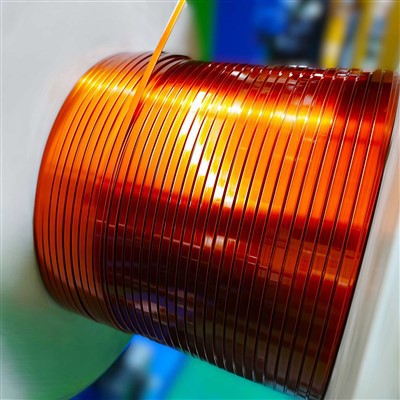
Let me wrap this up so it’s not a novel. The big takeaways: first, enameled flat wire’s moisture resistance isn’t a single number—it depends on the enamel type (PAI is best for damp/hot, polyester for general use, hybrid for middle ground), how it’s applied (cure temp, edge coating, no pinholes), and the conditions it’s in. Second, there’s no “universal” moisture-proof enamel—match it to your application, don’t cut corners. Third, even the best wire won’t survive if you damage the enamel or store it wrong.
Enameled Round Wire If you’re working on a project right now and you’re not sure what kind of enameled flat wire you need for moisture resistance—whether it’s a tiny DIY amp, an industrial motor, an outdoor transformer, or something else—hit me up. I don’t do generic sales pitches; I’ll ask you about your environment, your operating temp, how long you need it to last, and help you pick the right wire. No pressure, just real advice from someone who’s been in the game long enough to know what works and what doesn’t. Don’t hesitate to reach out to talk through your requirements.
References
- Enameled Wire Institute. (2022). Technical Handbook for Magnet Wire Properties. EWI Publications.
- IEEE Standards Association. (2019). Standard Test Methods for Electrical Insulating Materials for Magnet Wire. IEEE Std 117-2019.
- Zhang, L., et al. (2021). Moisture Resistance Characteristics of Polyamide-Imide Enamel Coatings for Flat Copper Wire. Journal of Electrical Materials, 50(6), 3452-3459.
Tianjin Jingwei Power Technology Co., Ltd.
As one of the most professional enameled flat wire manufacturers and suppliers in China, we’re featured by quality products and good service. Please rest assured to buy durable enameled flat wire made in China here from our factory. Contact us for more details.
Address: No.1 Chuangxin Rd. Xiaozhan Industrial Park, Jinnan District, Tianjin, China
E-mail: info@jwdc.cn
WebSite: https://www.jw-dcs.com/
