If you’ve ever worked in screen printing, you know how much rides on the tools you use to hold your substrates steady. A wrong move with a pallet can throw off print alignment, warp paper or fabric, or even lead to ruined jobs that eat into your bottom line. In my years as a supplier of pallets specifically for screen printing presses, I’ve talked to dozens of shops that mix up fixed and adjustable pallets—and that confusion often costs them time and money. Let’s break down what actually separates these two types, how they perform in real shop scenarios, and which one makes sense for your operation. Pallet for Screen Printing Press
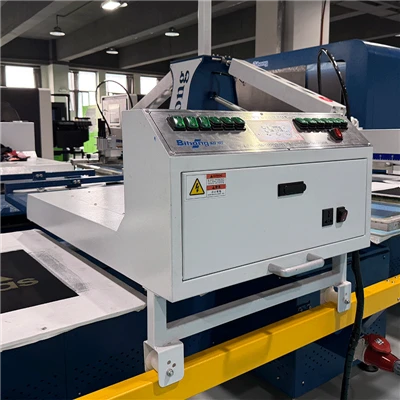
First, let’s ground this in what a pallet actually does for screen printing. Unlike generic shipping pallets, our pallets are built to sit directly on a press bed, holding substrates (tees, tote bags, signs, anything you’re printing on) flat and securely during the print stroke. That means precision isn’t just a nice-to-have—it’s the whole point. A pallet that shifts even a fraction of an inch between prints will turn a 100-piece run into a pile of rejects. That’s why choosing the right kind isn’t just a material call; it’s a workflow call.
Starting with fixed pallets. Fixed pallets, as the name suggests, have a set, unchanging size and shape. They’re milled or molded to exact dimensions, often with a flat, stable surface and pre-positioned mounting points to lock them onto your press bed. At first glance, they seem simple: you pick a size for your most common substrate, mount it once, and you’re good to go. But here’s what most new printers don’t realize: fixed pallets shine for repetitive, high-volume runs. If you’re running 500 plain cotton tees every week, a fixed pallet sized for a standard adult tee is perfect. It’s rigid, it doesn’t move, and once you’ve aligned your screen to that exact pallet, you can crank out dozens of prints without readjusting.
But let’s talk about the limitations I’ve seen come up again and again. Fixed pallets are one-trick ponies by design. If you get a custom order for a youth-sized tee or a tote bag that’s 2 inches wider than your standard pallet, you’ve got a problem. You can force a substrate to fit a fixed pallet, but that means stretching it, taping it down, or placing it off-center—all of which lead to misprints. I had a customer last year, a small shop that does both team uniforms and custom wedding tote bags, who was working with fixed pallets for years. They’d switch between two and three different sizes for each run, and every time they switched, they lost 15 to 20 minutes setting up and aligning the screen. By the end of each day, that added up to almost two hours of wasted time—time they could have used to take on more orders. Fixed pallets also don’t handle irregular substrates well: if you’re printing on a curved surface, a small sign, or something with a non-standard shape, a flat, fixed pallet won’t conform to the edges, leading to inconsistent pressure across the print.
Now, adjustable pallets. These are built with modular, sliding, or removable components that let you change the size of the pallet’s surface without replacing the whole unit. Most adjustable pallets have side rails and end blocks that you can slide along tracks to widen or narrow the surface, or snap off to adjust for shorter substrates. Some even have interchangeable inserts, so you can swap out the flat top for a contoured one if you’re printing on caps or mugs. For screen printers, that flexibility is a game-changer. Let’s go back to that customer I mentioned earlier: after switching to adjustable pallets, their setup time between runs dropped to under two minutes. Now they can shift from a youth tee to a tote bag without unmounting anything, just sliding the rails to match the substrate size.
But adjustable pallets have their own quirks that can trip up users if they don’t know how to work with them. The biggest concern with adjustable units is stability. Because they have moving parts, there’s a small risk of shifting during the print stroke if the rails aren’t tightened properly. I’ve seen shops skip locking the adjustment knobs to save time, only to have a pallet shift mid-print, ruining an entire run. Also, the modular design means you have to calibrate the pallet every time you adjust it—marking where the rails sit so your screen stays aligned. For small, one-off jobs, that calibration might not be worth it; a fixed pallet can be set up in 10 seconds vs. a few minutes of tweaking an adjustable unit. Adjustable pallets also tend to be slightly heavier than fixed ones, since they have extra moving hardware, which can be a minor issue if you’re loading and unloading pallets frequently for different presses.
Let’s get into the science that makes the difference matter for screen printing specifically. Screen printing relies on consistent pressure and registration (alignment between multiple print colors). A fixed pallet’s rigidity means that every substrate sits at the exact same height and position, so your screen will print the same way every single time. That consistency is why high-volume commercial shops, which run the same design on the same size substrate for thousands of pieces, almost exclusively use fixed pallets. Adjustable pallets, by contrast, rely on the alignment of their sliding rails—so the material and fit of the rails are critical. A cheap adjustable pallet with loose rails will have even more shift than a fixed pallet that’s slightly out of spec. That’s why, as a screen printing pallet supplier, we build our adjustable pallets with precision-machined aluminum rails and locking mechanisms that hold position even after hundreds of adjustments. The last thing a printer needs is a pallet that slips when they’re running a 10-color job with tight registration requirements.
Another real-world use case: let’s talk about specialty substrates. If you’re printing on rigid materials like foam board, wood signs, or acrylic, the flat surface of a fixed pallet works great, as long as the size matches. But if you’re printing on items like drawstring bags, which have a slightly flexible fabric that can shift, a fixed pallet might not have enough hold—unless you add tape, which can leave residue on your substrates. Our adjustable pallets come with optional gripper strips that you can position along the edges, so you can adjust where the grip sits to match the substrate, keeping it secure without tape. That’s a small detail that makes a big difference for shops that do a mix of apparel and hard goods.
I also want to address a common myth I hear all the time: “Adjustable pallets are more expensive, so they’re a better deal.” Not necessarily. If your shop only runs one size of tee 90% of the time, a high-quality fixed pallet will last you years, and you won’t waste money on adjustable hardware you’ll never use. But if you take on a wide range of order sizes or substrate types, the ROI on adjustable pallets hits within a few months. Let’s do the math: if you’re losing $500 a month in wasted time and misprints because you’re switching fixed pallets for each run, an adjustable pallet that costs $800 will pay for itself in two months. That’s not a number I make up—it’s what our own customers tell us on a regular basis.
Now, let’s talk about the pitfalls I see with both types. For fixed pallet newbies: the mistake is buying a pallet that’s just “close enough” to your substrate size. If your tee is 18 inches wide and your pallet is 17 inches wide, you’ll stretch the fabric to fit, which leads to the print being pulled out of shape. Always measure the widest point of your substrate, then add half an inch to an inch for clearance—so the substrate sits on the pallet, not off the edges. For adjustable pallet newbies: the mistake is over-adjusting, or not locking the rails tight enough. We have a simple rule with our customers: after you slide the rails, give each one a firm tug to make sure it doesn’t move, then tighten the locking knob until it’s snug. It takes two extra seconds, but it saves you from ruining a whole run.
Another point that’s specific to screen printing presses: pallet thickness. Fixed pallets are often milled to a standard thickness that matches your press’s bed height, which means you don’t have to shim (add small spacers) to make the pallet sit level. Adjustable pallets, if they’re not designed with consistent thickness, can have tiny gaps under the rails, leading to a wobbly pallet. That’s why all our pallets—fixed and adjustable—are precision-machined to within 0.01 inches, so you don’t have to waste time shimming. That’s a detail that separates our pallets from the generic ones you might find at a hardware store, which are too thick or too thin for standard press beds.
So, how do you choose between them? Let’s break it down by shop type. If you’re a high-volume commercial shop that runs the same design and same substrate size for the majority of your jobs, fixed pallets are the way to go. They’re more durable, cheaper per unit, and give you the consistency you need for large runs. If you’re a small to medium shop with a mix of order sizes, custom jobs, or specialty substrates, adjustable pallets will give you the flexibility to take on more work without investing in a whole set of fixed pallets for every size. If you’re a startup still figuring out your workflow, adjustable pallets are a safer bet—you can start with one unit, add fixed pallets for your most common size later, as you grow.
I get calls every week from printers who are frustrated with wasted time or misprints, and 9 out of 10 times, the problem comes down to choosing the wrong pallet type for their actual workflow. Last month, a printer reached out saying their adjustable pallet was causing registration issues, and when we looked at their setup, they’d been adjusting the rails without locking them—simple fix, no need to switch to a fixed pallet. Another printer, who’d been using fixed pallets for 10 years, switched to adjustable pallets after a big wedding order required 3 different tote sizes, and told us later they’d made $1,200 extra in profit that month because they could take on the order without hiring a temp to help with setup.
At the end of the day, a pallet isn’t just a block of wood or plastic—it’s a tool that directly impacts your bottom line. The difference between fixed and adjustable isn’t just in their design; it’s in how they fit your workflow. Fixed pallets are the workhorse for consistent, high-volume work. Adjustable pallets are the flexible workhorse for growing shops that take on varied jobs. Neither is “better” than the other—they’re just different, and the right choice depends on what you print, how often you change jobs, and how much time you’re willing to spend on setup.
If you’re still unsure which pallet is right for your screen printing press, we’re here to help. We work with shops of all sizes to match the right pallet type to your specific needs, no generic one-size-fits-all solutions. Reach out to our team to discuss your workflow, substrate types, and order volume, and we’ll help you find the pallet that will cut down on setup time, reduce misprints, and help you take on more jobs. Don’t let pallet confusion hold your shop back—let’s find the right solution together.
Pallet for Screen Printing Press References
- Screen Printing: Principles and Practices, 3rd Edition, Graphic Arts Technical Foundation, 2019.
- Pallet Design for Industrial Printing Applications, International Journal of Graphic Communications, Vol. 12, No. 2, 2021, pp. 45-62.
- Operational Efficiency in Small Screen Printing Shops, Printing Industries of America, 2022.
- Material Selection for Precision Pallets, Journal of Manufacturing Processes, Vol. 48, 2020, pp. 189-197.
Guangdong Aces Machinery Co., Ltd.
Guangdong Aces Machinery Co., Ltd. is one of the most professional pallet for screen printing press manufacturers and suppliers in China. We are committed to providing high quality equipment made in China with low price. If you’re going to buy durable pallet for screen printing press, welcome to get pricelist from our factory. Customized orders are welcome.
Address: 701, Building 5, Liandong U Valley, No.8 Zhixin 1st Road, Dagang Town, Nansha District, Guangzhou City, Guangdong Province, China.
E-mail: jessie@bhprinter.com
WebSite: https://www.bihongprinter.com/
