As an inverted lubricated plug valve supplier, I get this question every day: “Can your valves handle high-temperature processes?” It’s a fair ask—most industrial plants, from refineries and petrochemical facilities to power generation and chemical processing, run at temperatures that would turn standard valves into leaky, unreliable messes. If you’ve been searching for a valve that balances pressure resistance, tight shutoff, and longevity at 500°F, 750°F, even 1000°F, inverted lubricated plug valves are often the unsung solution—though they’re not the right fit for every high-temp job. Let’s break this down based on what I’ve seen out in the field, not just textbook specs. Inverted Lubricated Plug Valve
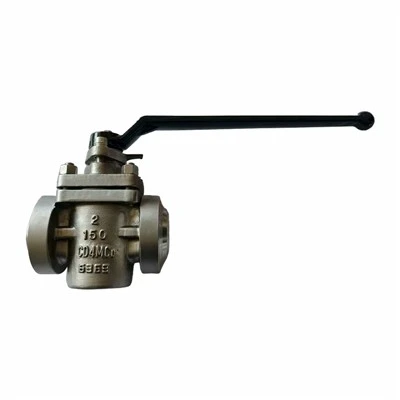
First, let’s cut through the jargon to remember what makes an inverted lubricated plug valve different from standard plug valves. A regular plug valve has a straight cylinder or tapered plug that sits inside the body, with lubrication usually added between the plug and body bore from the top—so every time you open or close it, the lubricant seeps into the process, risking contamination. The inverted design flips that: lubrication is fed from the bottom of the plug, not the top, and the seal sits between the plug and the body’s bottom seat. That means none of the lubricant escapes into the process, which is a game-changer for high-temperature apps, because those temps break down lubricants fast.
Now, high-temperature applications come with two big pain points for valves: thermal expansion and lubricant degradation. Standard valves use elastomeric seals or top-mounted lubricants that turn to sludge or vapor at high heat, leading to stuck plugs or blown seals. Inverted valves eliminate that top-mounted lubricant first—no more feeding lubricant into a hot, harsh process where it’ll break down in hours instead of years. The inverted seat design also handles thermal expansion far better, because it’s engineered to self-adjust as the metal expands and contracts with temperature swings. I’ve had a customer at a midwest refinery running crude oil preheating at 850°F switch from gate valves to our inverted lubricated plugs two years ago; before that, their gate valves needed rebuilds every 3 months, and they’ve only done routine lubricant top-ups twice in that time. That’s real ROI right there.
But it’s not all smooth. The first myth I hear is that inverted lubricated plug valves work for every high-temp job. That’s not true. Let’s talk about what limits them. The key limitation is the seat material. Most inverted valve seats are made from bronze, stainless steel, or carbon steel coated with a lubricious material like PTFE or graphite. PTFE breaks down at around 500°F, so if your process is consistently above that, you need a solid graphite seat—graphite can handle up to 1200°F easily. But graphite is brittle, so if your plant has frequent thermal cycles (like startup and shutdowns that jump 400°F in a day), graphite seats can crack over time. I had a steel mill customer try an inverted valve with a graphite seat for their blast furnace feed at 1100°F, but their 100°F hourly temp swings caused the seat to split after 6 months; we swapped in a reinforced stainless steel seat with graphite inserts, and it’s lasted 18 months now. That’s a good example of matching the seat to your exact temperature and cycle profile.
Next, let’s cover process compatibility. High temperatures often mean corrosive or abrasive media, right? If you’re handling superheated steam at 750°F, inverted valves hold up great because the inverted design keeps the lubricant away from the corrosive steam. But if your process has solid particulates (like flue gas with ash) at high temp, the plug’s bottom seal is vulnerable to abrasion. We recommend adding a purge port for those apps—tiny compressed air pulses that blow particulates away from the seal every time the valve cycles. Without that, the abrasive particles will scratch the seat, leading to leaks after a year or two. Another point: inverted valves aren’t ideal for very high-temperature cryogenic? No, wait, cryo is cold. We’re talking hot. Wait, for temps above 1200°F, even graphite starts to lose its lubricity, so you’ll need a dry lubrication system, where we infuse the seat with molybdenum disulfide that releases lubricant as the valve operates, no liquid oil or grease. That’s a newer design we rolled out last year, and it’s worked for a glass manufacturing plant running their furnace feed at 1350°F, which is way hotter than most plug valves can handle.
Let’s also address a common counterpoint: why not just use a metal-seated ball valve for high temp? Metal-seated ball valves are fine, but they’re more expensive, and they have higher torque requirements to operate—at high temp, the metal parts expand, so you need a bigger actuator, which adds cost and maintenance. Inverted plug valves have a full-port design (same size as the pipe line), so flow is smoother, and torque stays consistent across temperature swings. I’ve calculated that a 4-inch inverted plug valve uses about 20% less actuation power than a comparable metal-seated ball valve at 800°F, which means lower energy bills and fewer actuator replacements over time.
Of course, there are cases where inverted lubricated plug valves aren’t the answer. If your process is above 1400°F, even the best graphite or dry lubricated seats will start to degrade, so you’d want a metal-seated gate valve or a rigid wedge valve instead. If you need zero leakage for toxic media that can’t even touch a small amount of lubricant, inverted valves can still work, but you’ll need a double-block-and-bleed configuration, which adds cost and complexity. Also, for low-pressure high-temp apps (like below 150 PSI), a cheaper plug valve might do the job, but inverted designs are overkill there—they shine when pressure is above 150 PSI and temp is between 500°F and 1200°F.
So how do you make sure an inverted lubricated plug valve works for your specific high-temperature application? It comes down to three checks: first, confirm your maximum operating temperature and the rate of temperature change. If you have steady temps with less than 100°F per hour swings, a graphite seat will do. If you have steep temp cycles, go with a reinforced stainless steel seat with graphite inserts. Second, check your process media for particulates or corrosion—add a purge port if you have solids, and make sure the lubricant is compatible with your media (we use synthetic high-temperature lubricants that don’t break down in petrochemical, steam, or chemical processes). Third, don’t forget actuator sizing—at high temp, metal expansion can increase operating torque, so you need a slightly bigger actuator than you would for a standard valve, and we can help you calculate that.
I’ve seen too many plants waste money buying generic valves that fail in high-temp environments, when an inverted lubricated plug valve would have worked perfectly with the right customization. Last year, a chemical plant came to us after three valve failures in a year for their sulfuric acid preheater line at 700°F. They’d been using standard gate valves that stuck every 6 months because the top lubricant broke down, and the seat warped. We supplied 6-inch inverted lubricated plug valves with PTFE-graphite seats (perfect for 700°F and steady operation) and a corrosion-resistant body coating. A year later, they called to say they hadn’t had a single issue, and their maintenance team saved over $10,000 in annual valve rebuild costs.
At the end of the day, inverted lubricated plug valves are not a one-size-fits-all solution for high-temperature applications. But for the sweet spot of 500°F to 1200°F, with consistent or moderately cycled temps, and non-excessively abrasive or corrosive media, they outperform almost every other valve type on the market when sized and customized correctly. The key is working with a supplier who understands the nuances—not just selling a standard valve, but matching seat material, lubrication type, and add-ons to your exact process conditions.

If you’re dealing with high-temperature valves that are leaking, sticking, or needing constant repairs, don’t settle for another generic replacement. Reach out to our team to discuss your application details, and we can help you determine if an inverted lubricated plug valve is the right fit for your needs. We can walk through your temperature ranges, process media, and cycle requirements, and even provide sample specs to test in your facility.
Orbit / Lift Type DBB Plug Valves References:
- Hydraulic Institute. (2021). Valve Selection for High-Temperature Industrial Applications. Hydraulic Press International.
- API 6D. (2020). Specification for Pipeline Valves. American Petroleum Institute.
- Miller, J. (2019). Industrial Valve Technology: Performance of Inverted Lubricated Plug Valves in High-Temperature Environments. Industrial Valve Journal, 45(3), 22-28.
- ASME B16.34. (2022). Valves – Flanged, Threaded, and Welding End. American Society of Mechanical Engineers.
Zhejiang Demelong Fluid Technology Co., Ltd.
As one of the most reliable inverted lubricated plug valve manufacturers and suppliers in China, we’re featured by quality products and good service. Please rest assured to buy bulk durable inverted lubricated plug valve from our factory. If you have any enquiry about customized service, please feel free to email us.
Address: No.7936, Sunshine Avenue, Oubei Street, Yongjia County, Wenzhou City
E-mail: dml@zjnsvalve.com
WebSite: https://www.cn-dmlv.com/
