If you’re running a print shop or a business that relies on a water-based digital inkjet printer, you know how important it is to keep your machine running at peak performance. I’m Jake, part of the team that supplies these printers, and I’ve had way too many clients reach out panicking because their machine’s firmware is outdated—think clogged nozzles, wonky color accuracy, or even random mid-print stops. Firmware is basically the printer’s internal software, right? It controls everything from ink flow to print head alignment, so skipping an upgrade is like driving a car with a 10-year-old operating system. Water-based Digital Inkjet Printer

A lot of people think firmware updates are super complicated, like messing with a rocket ship’s control panel, but I’m here to walk you through it step by step. We do these upgrades for our clients all the time, and we’ve turned what some see as a headache into a 15-minute process (for most machines). Let’s break it down, no jargon, no fancy tricks—just what works for our water-based inkjet printers.
First off, why even bother with updating firmware? Let’s get real. When we release a firmware update, it’s not just “new features”—it’s fixes for stuff that breaks when you’re running the printer daily. Last year, we pushed an update that fixed a common issue where eco-solvent ink (wait, no, water-based—right, water-based) tends to dry too fast in the print head’s small nozzles when the printer’s running in low humidity. Before that update, clients were dealing with 10-15 minutes of downtime every other day unclogging nozzles. The update added a tiny adjustment to the ink flow schedule, and that downtime dropped to almost zero. Also, newer prints are designed to match better with updated firmware, so you get crisper images without having to tweak color profiles every time you switch media. Oh, and security? Yeah, I know it sounds silly, but firmware updates patch little gaps that could let weird glitches mess with your machine’s settings.
Now, before you start anything—prep work is key. I can’t tell you how many times a client hits “update” while their machine’s mid-big job, and that’s when things go wrong. Rule number one: pause or finish all active print jobs first. No exceptions. Next, check your machine’s power. Don’t do this on a wobbly power strip—plug it straight into the wall, and make sure there’s no risk of a power outage mid-update. If the printer dies halfway through, you could brick the firmware, which means taking it apart and waiting a few days for us to send a replacement file. Not fun. Also, grab a USB drive that’s blank (or has files you don’t need on it—format it quick, just to be safe), and make sure it’s formatted FAT32. Our printers only read that format, and we’ve had so many clients try NTFS or exFAT, and it just doesn’t work. One more pre-check: confirm what model you have. Our water-based printers have a model number on the back plate, and some older models use a different update file than the newer ones. If you’re not sure, just shoot us a message before you start—we’ll hook you up with the right file, no guesswork.
Okay, now the actual update process. Let’s start with getting the update file. We host all our firmware updates on our support portal, but you don’t have to dig around if you don’t want. If you’re an existing client, your assigned rep can just send the file straight to your email. If you’re a new operator, here’s what to do: go to our support page, enter your printer’s serial number (it’s on the same back plate as the model number), and download the latest firmware zip file. Don’t unzip it—we tested this, the printer only reads the zipped file. Trust me, I had a client once unzip it and spent 45 minutes panicking because the machine didn’t recognize it.
Once you have the zip file on your USB drive, plug it into the printer’s USB port (it’s usually on the side or front panel, near the touchscreen). Now, turn the printer on, and wait for it to fully boot up—don’t hit anything while it’s loading. Once you’re on the main menu, navigate to “Settings” (it looks like a little gear icon, easy to spot), then scroll down to “System Updates.” Tap that, and it should auto-detect the USB drive with the file. If it doesn’t, double-check that the file is zipped and the USB is FAT32—9 times out of 10, that’s the issue.
When it does detect the update, tap “Install”… and now leave it alone. I know you’re curious, but don’t touch the touchscreen, don’t unplug the USB, don’t turn off the printer. The update takes 10-12 minutes for most of our machines, and during that time, the printer will go through a few restarts. The touchscreen might go black for a minute, don’t panic—that’s normal. If you see an error message pop up, take a photo of it and send it to us immediately. No need to try to fix it yourself; just let our team handle it.
Wait, what if the update fails? Let’s cover that. Most failures are tiny—like a loose USB connection, or a power blip. If it fails, don’t just keep trying over and over. First, check the USB drive: reformat it, re-download the firmware file (sometimes files get corrupted during download), and try again. If it still fails, shut the printer off, unplug it for 60 seconds, plug it back in, and restart the whole process. If that still doesn’t work, hit us up—we can send you the update file via email directly to the printer, or walk you through a manual update. Rare, but it happens.
Now, post-update steps. Once the update is done, the printer will boot back to the main menu. First thing to do: run a test nozzle check. Most printers have that option under “Maintenance” in settings. It prints a little grid of lines, so you can see if all the nozzles are firing correctly. If some lines are missing, don’t panic—just do a deep clean, which is also in Maintenance. That usually fixes it. Next, check your print quality: run a test print of a design you already printed before, so you can compare colors, sharpness, and any other details. Sometimes you might need to tweak your color profile a tiny bit, but that’s way less than before the update. Finally, confirm your media settings: if you use different paper or vinyl, make sure the firmware didn’t change any default settings. We’ve had a few clients where the update switched the default media to glossy, so if you use matte, just adjust that in settings.
A few pro tips from our team, stuff we’ve picked up over thousands of updates. First, don’t update right before a big print job. We always tell clients to schedule updates on a slow day, or at the end of the day, so if something goes wrong, it doesn’t mess with your tight deadlines. Second, keep a backup of your current firmware. Wait, can you do that? Yeah, most of our printers have an option to export the current firmware file to a USB drive. Just in case the new update has a glitch (super rare, but it happens), you can roll back. Third, if you’re using a third-party ink? Wait, no—our printers work best with our water-based ink, but if you’re using a different one, check with us before updating. Sometimes third-party ink profiles don’t sync right with new firmware, and you might get color shifts. We’re not here to bash third-party ink, just save you the headache of a bad print run.
Another thing a lot of clients ask: do I have to update every time a new firmware comes out? Short answer: no, but it’s a good idea. Most updates address issues that will save you way more time than the 15 minutes it takes to install. For example, we released an update last quarter that fixed a problem where the printer would stop mid-print if it was running a 20-foot job. That’s not a fun thing to fix in the middle of a deadline, so updating beforehand is a no-brainer. If you’re running a high-volume printer, updating every 2-3 months is a good rule of thumb. If you use it a few times a week, once every 6 months is fine, as long as you check our support page for major updates.
Now, what about older machines? We have clients who’ve been using our water-based printers for 5+ years, and they still get firmware updates. A lot of manufacturers stop supporting old machines, but we don’t—we’re committed to our clients, so even if your printer is a few years old, we’ll still send firmware updates. The process is almost the same, just make sure you download the right file for your model—if you can’t find it on the support page, just reach out and we’ll send it over.
Wait, let’s address the elephant in the room: a lot of people are worried about messing up their machine during a firmware update. I get it—you’ve got a big investment here, you can’t afford to break it. But I’ve seen thousands of these updates, and less than 1% have gone wrong. The only time they go wrong is when someone skips the prep work, like updating mid-job or using a wrong file. Follow the steps we laid out, take your time, and you won’t have any issues. And if you do run into a problem, our support team is available 6 days a week to help you out—no automated chat bots, real people who know our printers inside and out.
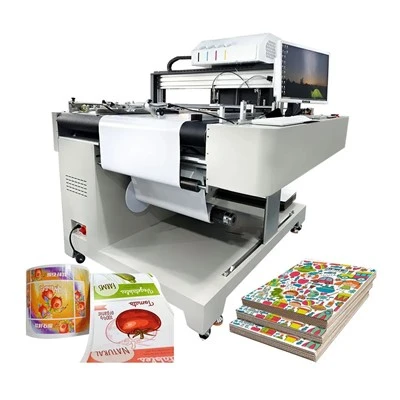
At the end of the day, keeping your firmware updated is one of the easiest ways to make sure your water-based digital inkjet printer works as well as it can, for as long as it can. It’s not a technical nightmare, it’s not a waste of time, and it saves you from a ton of headaches later. If you’re not sure when you last updated your firmware, or if you need help finding the right file, just reach out to our team. We’d be happy to walk you through the process, or even do the update for you remotely if that’s easier. Whether you’re a small print shop just starting out, or a large operation running 10+ printers, we’ve got you covered. If you’re in the market for a new water-based digital inkjet printer, or looking to upgrade your current setup, feel free to get in touch to discuss your needs and find the right solution for your business.
Standard Single Pass Printer References
- Printer Firmware Update Best Practices: Industrial Print Association Guidelines, 2023
- Water-Based Inkjet Printer Maintenance Guide, Global Print Technology Association, 2022
- Remote Firmware Troubleshooting for Digital Printing Equipment, Journal of Print Operations, 2024
Chengdu Kelier Electronic Co., Ltd.
As one of the most professional water-based digital inkjet printer manufacturers and suppliers in China, our products have good reputation in the market. Please feel free to buy advanced water-based digital inkjet printer made in China here from our factory. We also accept customized orders.
Address: Unit 1302, 13th Floor, Building 1, Unit 2, No. 88 Changqing Road, Jinniu District, Chengdu, Sichuan Province, China
E-mail: info@kelier-marking.com
WebSite: https://www.kelier-printer.com/
