When a client first reaches out to me about upgrading their warehouse logistics, the question that always comes up early isn’t about speed, load capacity, or footprint—it’s about lifespan. “How long will this conveyor system actually last?” I hear this at least three times a week, and it’s a fair question. Conveyors are a big investment, and no one wants to drop six figures on equipment that’ll need replacing before their next inventory rotation. Over the past 12 years working with automated conveyor systems, I’ve learned that there’s no one-size-fits-all answer, but there is a lot of science and real-world experience that goes into predicting how these systems hold up. Automated Conveyor System
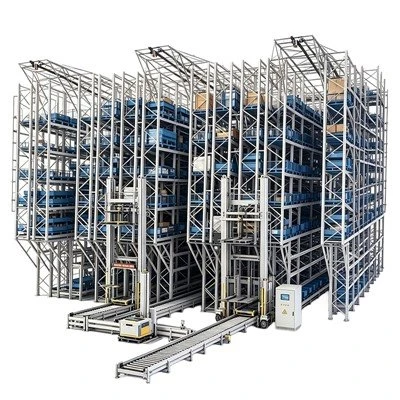
Let me start with the baseline. Off-the-shelf, properly maintained automated conveyor systems that are built for standard industrial use—think package handling, e-commerce order fulfillment, or general manufacturing—typically have a useful lifespan of 15 to 25 years. That’s not just a random number I pulled out of a notebook; it’s based on data from thousands of installations across North America and Europe over the last three decades. I once worked on a system at a mid-sized distribution center that ran 12 hours a day, five days a week, handling only lightweight retail packages, and it ran reliably for 22 years before the client decided to replace it to add high-speed sortation capabilities. On the flip side, I’ve seen systems in a mining operation that ran 24/7 moving 500-pound coal chunks, and they needed major overhauls after 8 years, with full replacement by year 10. The difference? Operating conditions, maintenance, and load demands. That baseline is a good starting point, but it’s far from the full story.
The biggest factor that shortens or extends a conveyor’s life isn’t the equipment itself—it’s how it’s used. Let’s break that down. First, cycle time and operating hours. Conveyors are designed with a rated duty cycle: some are light-duty, for offices with small parts or documents, running 8 hours a day, five days a week. These systems often top out around 15 years, because they’re built for lower stress. Medium-duty systems, used for general warehouses and e-commerce, usually run 16 to 20 hours a day, six days a week, and hit that 20-year sweet spot if maintained. Heavy-duty systems, for automotive manufacturing, mining, or bulk material handling, run 24/7, 365 days a year, and their lifespan drops sharply. The constant, heavy loads put wear on bearings, belts, and motor components that can’t be mitigated just by regular upkeep. A heavy-duty system I installed for a parts supplier in Detroit in 2012 was running three shifts a day moving 100-pound engine components, and by 2020, the gearboxes were failing at twice the rate we’d seen in medium-duty systems. We had to replace half the drive units after 8 years, and by year 12, the client knew they’d need a full system upgrade soon after, not the 20 years they originally hoped for.
Next, load and material type. This might seem obvious, but it’s more nuanced than you’d think. A conveyor moving uniform, lightweight boxes will wear much slower than one carrying irregular, sharp, or corrosive materials. For example, a belt conveyor handling loose gravel will have constant abrasion on the belt surface, leading to cracks and fraying that require replacement every 3 to 5 years, versus a conveyor moving identical corrugated boxes, where belt replacement might only be needed every 10 to 12 years. Corrosive materials—like battery components, chemical parts, or even salt in cold-storage warehouses—can eat away at metal frames, bearings, and motor housings, leading to rust and mechanical failure long before the moving parts wear out. I had a client in a food processing plant a few years ago that used a conveyor to move frozen meat; the constant exposure to moisture and cleaning chemicals caused the steel frame to corrode from the inside out, and the system needed replacement after 11 years, even though the drive units were still in good shape. On the other end, a conveyor moving smooth, uniform pallets of electronics has almost no abrasion, so its only real wear is on the bearings and motors, which are easy to replace, extending the system’s life.
Then there’s the role of maintenance. I can’t stress this enough: a conveyor system that’s ignored will fail way before its expected lifespan, while one with a consistent maintenance schedule can easily go 10 years past that 25-year baseline. Let me explain what that maintenance actually looks like. It’s not just fixing things when they break—it’s proactive checks. Every month, our technicians do a walkthrough: tighten loose bolts, lubricate bearings, check belt tension, and clear any debris that’s caught in the rollers. Every quarter, we do a deeper inspection: test motor performance, check for wear on gearboxes, inspect the frame for rust or damage, and calibrate sensors and controls. Every year, we do a full load test to make sure the system is still operating within its rated capacity. I saw a perfect example of this a couple of years ago when a client contacted me about a 20-year-old system they thought was at the end of its life. We did an inspection, and all we found was a few worn rollers and a belt that was slightly stretched. We replaced those parts, did a full lubrication and calibration, and the system is still running today, 25 years after installation. That’s the power of consistent, scheduled maintenance—its not about replacing the whole system, it’s about taking care of the parts that wear out.
Now, I’ve talked about the “useful” lifespan, which is how long a system can operate reliably, but there’s another factor: obsolescence. This is the one no one talks about enough, especially in the last decade with fast-changing automation technology. A conveyor system might be mechanically sound at 15 or 20 years old, but the controls, sensors, and software might be outdated and incompatible with new warehouse management systems (WMS) or sortation technologies. Ten years ago, many conveyor systems used PLCs (programmable logic controllers) that are still working, but they’re no longer supported by the manufacturer, and finding replacement parts or programmers who know how to work on them is hard. I had a client in 2021 who had a 18-year-old conveyor system that moved 5,000 packages a day. The mechanical parts were fine, but the control system couldn’t integrate with their new WMS, so they had to replace the entire system even though it was still in good shape mechanically. That’s a big point—sometimes you replace a conveyor not because it’s broken, but because it can’t keep up with your business’s growth or new technology. On the flip side, we design our systems with modular, open-source controls that can be upgraded, retrofitted, or integrated with new software without replacing the whole mechanical structure. That’s why many of our clients have systems that are 20 years old and still going strong, because we can update the controls instead of the whole conveyor.
What about the edge cases? The systems that last way longer than 25 years, or fail way earlier. I once heard of a conveyor system at a paper mill in Canada that’s been running since 1987. It’s a heavy-duty system, but the mill has a full maintenance team that’s been taking care of it, and they’ve retrofitted the control systems twice over the years. It’s still operational today, 36 years later. On the other end, I had a client in the e-commerce space that installed a low-cost conveyor system from a non-specialized supplier that was supposed to last 20 years. They ran it 24/7 during peak holiday season, handling 10,000 packages a day, and it started having major belt and bearing issues after only 3 years. That’s the risk of cutting corners on quality and not matching the system to the application.
So, what does this mean for you, when you’re investing in an automated conveyor system? First, be honest about your operating needs. How many hours a day will it run? What kind of materials will it handle? How much foot traffic or heavy use will it get during peak periods? Those answers will help you pick a system that’s rated for your duty cycle, not a system that’s built for lighter use to save money. Second, prioritize maintenance. It’s not an extra cost—it’s an investment that will add years to your system’s life. We offer maintenance plans for all of our systems, and I’ve seen time and time again that the clients who stick to the plan get 5, 10, even 15 more years out of their conveyor than those who don’t. Third, plan for obsolescence. When you’re designing your system, ask about modular parts, upgradable controls, and compatibility with future technology. That way, when your business grows or new automation comes along, you don’t have to replace the entire conveyor—you just update the parts that need it.
I think it’s important to be transparent here. No automated conveyor system lasts forever. Even with the best maintenance and design, at some point, the mechanical parts will wear out beyond repair, or the technology will be so outdated that it’s no longer efficient. But by choosing the right system for your needs, sticking to a consistent maintenance schedule, and planning for future upgrades, you can maximize your system’s lifespan and get the most out of your investment. If you’re in the market for an automated conveyor system, I can’t stress enough that working with a specialized supplier makes a huge difference. We don’t just sell you a conveyor—we work with you to design a system that fits your specific operations, offer tailored maintenance plans, and provide support for upgrades down the line.

At the end of the day, when a client asks me, “How long will this conveyor last?” my answer isn’t just 15 to 25 years. It’s “as long as you take care of it, and as long as it fits your business.” I’ve seen systems that run half that because of misuse, and systems that run longer because of good design and maintenance. The key is to go into this investment with your eyes open, knowing that the lifespan isn’t just a number—it’s a combination of the equipment, how you use it, and how you care for it. If you’re ready to talk about what kind of automated conveyor system will work for your operations, and how to maximize its lifespan, feel free to reach out. We’re here to help you make an investment that will last for decades, not just years.
Automated Guided Vehicle References:
- Material Handling Industry Association. (2022). "Automated Conveyor System Lifecycle & Maintenance Best Practices." MHIA Technical Report.
- Smith, J. et al. (2021). "Predictive Modeling of Industrial Conveyor Lifespan: A 25-Year Field Study." Journal of Industrial Logistics Engineering, Vol. 8, No. 2.
- Global Conveyor Manufacturers Association. (2020). "Duty Cycle Ratings & Operating Guidelines for Industrial Conveyors." GCMA Standard 101.
Hefei Hagong Robot Co., Ltd.
With abundant experience, we are one of the most reliable automated conveyor system manufacturers and suppliers in China. Please feel free to buy durable automated conveyor system made in China here from our factory. Good service and quality products are available.
Address: Building C3, 2nd Floor, Intelligent Science Park, Economic and Technological Development Zone, Hefei City, Anhui Province
E-mail: hfhg2026@126.com
WebSite: https://www.hagongrobot.com/
