If you’ve ever sourced materials for outdoor gear, event tents, pet carriers, or even luggage, you’ve probably stumbled on 600D Oxford fabric. It’s the workhorse of the fabric world—durable, versatile, and used for everything from heavy-duty duffels to motorcycle seat covers. And let’s be real: when you’re lining up pricing for your next order, the first question that pops up is, “How much does 600D Oxford fabric cost per yard?” 600D Oxford Fabric
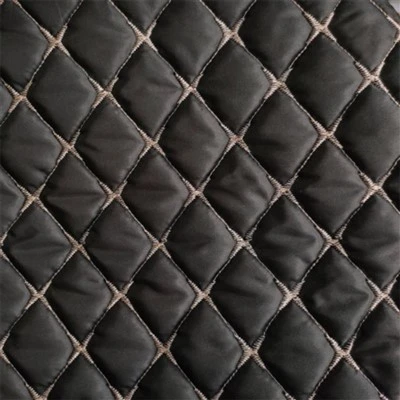
As someone who’s been supplying 600D Oxford for small businesses, indie brands, and big-name manufacturers for over a decade, I get it. It’s not just a “one-size-fits-all” number—there are a ton of factors that swing the price, and I’ve seen way too many people get sticker shock when they skip the details and just Google “600D Oxford fabric price per yard.”
Let’s break this down like I’d explain it to a first-time buyer who’s calling me from their design studio at 2 a.m. panicking about a bulk order. No corporate jargon, no hidden fine print, just what actually determines the cost.
First, let’s start with the basics: what even is 600D, anyway? The “600D” stands for denier, which is a unit that measures the weight of the yarn used to make the fabric. Think of it like thread count, but for yarn—higher denier means thicker, heavier, more durable yarn. A 600D fabric is tough enough to resist tears from sharp rocks, scrapes from sidewalks, and even a little rain, which is why it’s way more popular than, say, 300D (which is too flimsy for heavy use) or 1680D (which is overkill and way pricier for most projects).
But here’s the thing: two fabrics labeled “600D” can look identical, but cost $2 more per yard. Why? The quality of the yarn and the treatment it gets before it hits your order. Let’s get into the specifics.
First big factor: Yarn quality & origin
Not all 600D yarn is created equal. Most 600D Oxford you’ll see is either virgin polyester or recycled polyester. Virgin polyester is made from new plastic pellets, so it’s more consistent in thickness, stronger, and less likely to fray over time. Recycled polyester (rPET) is made from old plastic bottles, which is great for sustainability, but the yarn can have tiny inconsistencies because it’s melted down from scrap.
A lot of suppliers will cut corners with low-grade recycled yarn that’s uneven, so you end up with fabric that looks 600D on the label but tears after a few uses. For bulk orders, that’s a disaster—you’re stuck with a bunch of defective material, and your brand’s reputation takes a hit.
Right now, virgin polyester 600D Oxford costs between $1.50 and $3.50 per yard for bulk orders (I’m talking 500+ yards, not the 5-yard sample most people buy). Recycled polyester 600D is a bit cheaper, usually $1.20 to $2.80 per yard, but only if it’s made from post-consumer bottles (the good stuff, not factory scrap, which is way less reliable).
Why the huge range? A lot of small suppliers will source cheap 600D yarn from factories in Southeast Asia that mass-produce low-quality fabric. I’ve had customers come to me after ordering 1,000 yards from a no-name supplier, only to find out half the yardage had loose weave gaps that made it impossible to line their dog crates. I pay a little more for consistent yarn, but it means my customers don’t waste time or money on returns.
Next: Coating & finish (this is where most price markup happens)
600D Oxford is inherently water-resistant, but not waterproof. If you’re making a rain jacket, a boat cover, or a backpack that has to hold up in a downpour, you need a coating. The type of coating will make or break the price, and it’s also why two identical-looking 600D fabrics can have a $1 per yard difference.
The most common coatings are PU (polyurethane) and PVC (polyvinyl chloride). PU is flexible, lightweight, and doesn’t crack in cold weather—perfect for gear that gets moved around a lot. PVC is thicker, super waterproof, and cheaper per yard, but it’s stiff, gets brittle in winter, and has that weird plastic smell that’s a turn-off for brands selling eco-friendly products.
A plain uncoated 600D Oxford is around $1.20 to $2 per yard, but add a PU coating (1,000mm to 2,000mm water resistance, which is standard for most outdoor gear) and that jumps to $1.80 to $3.80 per yard. If you need a heavy-duty coating for things like truck bed liners or industrial covers (10,000mm+ water resistance), you’re looking at $2.50 to $5 per yard.
Wait, what about other finishes? A lot of people ask about “water-repellent (DWR) treated” fabric vs. coated. DWR is a spray-on finish that makes water bead up on the surface, but it wears off after a few washes. It’s cheaper than a full coating—usually adds $0.30 to $0.80 per yard—but not ideal for products that need long-term water protection. For example, a budget backpack might use DWR 600D, while a high-end camping tent will use a fully coated one.
Order size: The biggest hidden variable
I’ve had customers who order 10 yards for a sample kit pay $8 per yard, and another customer who ordered 10,000 yards for a retail line pay $1.80 per yard. That’s not a typo—order size is the single biggest factor that drives price. Fabric suppliers don’t make money on small orders; we have to factor in cutting, shipping, and minimum order quantities (MOQs) into the price for tiny runs.
MOQs for 600D Oxford vary a lot. Some suppliers have a 50-yard MOQ, others require 500+ yards. The closer you get to a supplier’s MOQ, the lower your per-yard price will be. For context, here’s a rough breakdown for bulk orders (500+ yards, which is the sweet spot for most small to medium brands):
- Virgin uncoated 600D: $1.50–$2.20/yd
- Recycled uncoated 600D: $1.20–$1.90/yd
- Virgin PU-coated (2,000mm): $1.80–$3.20/yd
- Recycled PU-coated (2,000mm): $1.50–$2.80/yd
- Heavy-duty coated (PVC or 10,000mm PU): $2.50–$4.50/yd
If you’re ordering less than 50 yards, expect to pay a 30–50% premium. That’s just how the industry works—fabric rolls are 50–100 yards each, so suppliers can’t split a roll into tiny pieces without extra work.
What about “specialty” 600D?
A lot of brands want fabrics that stand out, not just plain black or olive. Print, pattern, or extra treatments (like UV resistance for outdoor awnings, or mildew resistance for boat covers) will add to the cost. Full-color digital print on 600D Oxford, for example, adds $0.50 to $1.50 per yard, depending on the complexity. UV-resistant coatings add $0.30 to $0.70 per yard.
I once had a customer who made custom pet carriers for a luxury brand, so they wanted a 600D Oxford with a subtle floral print and stain resistance. We quoted them $4.20 per yard, which was a bit higher than the standard, but it was exactly what they needed to stand out from the budget carriers on Amazon.
Common myths that mess up your budget
Let’s clear up a few things I hear all the time:
- “600D is the strongest, so it’s always the best.” No. If you’re making a small tote bag, 600D is overkill. You could use 300D for half the price and it would work just fine. The “600” part is about durability for heavy use, not a generic “better” rating.
- “Cheap 600D is a steal.” I’ve seen people buy $1 per yard 600D from Alibaba, only to find out it’s actually 400D yarn mislabeled as 600D. It tears if you look at it wrong. You get what you pay for, especially with fabric.
- “Recycled is always more expensive.” Wait, no—right now, post-consumer rPET 600D is often cheaper than virgin, because the demand for recycled materials has driven down pricing for some types. It’s a win for your budget and the planet.
How to get the best price for your project
Here’s my advice for anyone sourcing 600D Oxford:
First, know your needs. Do you need it waterproof, or just water-resistant? Do you have a MOQ of 50 or 5,000? Be upfront with your supplier about how you’re using the fabric (tent? luggage? pet products?)—that way they can avoid recommending something too expensive or not durable enough.
Second, ask for a sample. Don’t order 1,000 yards sight unseen. A $5 sample will tell you if the weave is tight, if the coating is sticky, or if the color is off. I always send free samples to serious buyers, so that’s a no-brainer.
Third, negotiate for bulk pricing. If you’re placing a repeat order, ask for a discount—suppliers would rather lock in your business than turn down a long-term order.
At the end of the day, the price of 600D Oxford per yard isn’t a random number—it’s a mix of yarn quality, coating, order size, and extra treatments. For most small to medium brands, you’re looking at $1.50 to $3.50 per yard for a reliable, standard 600D that works for everything from backpacks to event gear.

If you’re ready to place an order, need a custom quote, or just have questions about which 600D is right for your project, hit me up. I’ve got samples of all my standard grades, and I can work with you on MOQs and pricing that fits your budget. Don’t waste time guessing—let’s talk through your needs and make sure you get the right fabric for the price.
Oxford Fabric References
Textile Institute. (2021). Denier and Yarn Measurement Standards for Polyester Fabrics.
American Apparel & Footwear Association. (2022). Sustainable Textile Supply Chain Trends.
Global Fabrics Association. (2023). 600D Oxford Fabric Industry Cost Benchmarks.
Dongyang Huangxiu Leather & Plastic Co., Ltd.
With abundant experience, we are one of the most professional 600d oxford fabric manufacturers in China. We warmly welcome you to wholesale customized 600d oxford fabric made in China here from our factory. If you have any enquiry about quotation and free sample, please feel free to email us.
Address: Huangxiu Leather & Plastic Products, No. 79 Shunda Road, Huashui Town, Dongyang City, Zhejiang Province
E-mail: x372921764@163.com
WebSite: https://www.huangxiutextile.com/
